
Tag: History

  • The role of playback singers in the middle/late twentieth century in Indian Movies

    The role of playback singers in the middle/late twentieth century in Indian Movies

    Playback singers in the middle/late twentieth century played a very critical role in the Indian cinema, primarily due to the practice of film characters to unrealistically start singing in between a running plot or story. It’s not really clear why characters needed to ‘sing’ rather than having music in the background, but this practice of singing started back in the 1930s when the Indian cinema was wedged in 2 genres, the ‘Commercial’ and ‘Art’ movies. The Commercial movies were spiced up with concoctions of action, melodrama, dances, comedy, and songs that were sung (or lip synched) by the characters of the movie, which were appealing to the masses, who were largely uneducated during that time. Unlike the commercial movies, art movies which were similar to the Hollywood setup, with realistic scenarios and music in the background rather than sung by the characters, this was more appealing to the urban elite and intellectuals. In the end, the commercial movies liked by the general masses ended up with most of the revenue, making playback singing an integral part of the movies, as the songs sung by the characters were most appreciated by the masses bringing in more revenue through sales of music records. It was essential to have good playback singers as the commercial movies at that time showed the protagonist as the perfect model of everything good, including singing, so the musical greats like Kundan Lal Saigal, Manna Dey were the melodic voices of the protagonist. Later Bands like Indian Ocean also performed for movies as by the end of the 20th century, commercial movies accepted songs in the background by the turn of the century.

    Kundan Lal Saigal was one of the foremost playback singers of Indian cinema, he was active in this field from 1932 to 1947. He was an actor and also sang for his character in films, as during his time, it was necessary for an actor to also be able to sing live on shoot. As songs became more and more important for movies and increased in number, it was more practical to have the songs recorded separately and then added in the movie later. This started of a career in the industry called ‘playback singing’. Kundanlal Saigal never sang for any other character than his own in his films. His songs are still heard today with great enthusiasm by many fans old and new.

    Manna Dey was a multifaceted playback singer, who used to compose his own songs. He was active in this field from 1951 to 2007. Unlike Kundan Lal Saigal who used to only sing for his own character, Manna Dey was purely in to music and used to sing for characters acted by other actors. By this time in the film industry, there were many actors who got recognized for their skill in acting, but they could not sing. Their character in the film would be sung by professional singers. Manna Dey liked experimenting with music. He was the one who pioneered a new genre in Indian music where he infused Indian classical music within a pop frame work. His experimentation with western music too produced many unforgettable melodies. It is said that Manna Dey has sung songs in every Indian Language that exists.

    Indian Ocean is an Indi-Rock Fusion Band known for their electrifying performances on stage as well as in movies. They have performed in many movies where their songs are sung in the background and conveying a message about the scenario of the film. They have been active in playback singing for movies since 2004. By around the 1990’s, just presenting generic songs wasn’t enough for the movies anymore, there was a lot of competition in the market and in order to get noticed by the public, movies needed to present something fresh. By this time, commercial movies also started introducing songs and music in the background rather than that being sung by the characters. Since the music was in the background now, many possibilities in composition and music started rising, as things weren’t limited to one or two playback singers anymore.

    One can see how playback singing in the Indian cinema evolved by starting out with simple tunes sung by actors live on shoot, to recording songs separately (in the 1930s to 40s) as the demand for songs grew in films. Somewhere around in the 1950’s Quantity of skills in an artist was no longer appreciated as much as quality of skills in an artist, hence professional singers were then used for playback singing. As time went by, tastes in music changed by bold experimenting and fusion. By the end of the century, songs were no longer ‘sung’ by the characters in the movies as much as it was earlier, they are more in the background. Even if the story or plot has halted while a song starts up, one can notice that the character may merely express their emotions than actually sing the song.

    Sources:

    –  Morcom Anna, Hypothesis: Hindi Film Songs and the Cinema

    –  Kundan Lal Saigal, http://members.tripod.com/oldies_club/profile_kls.htm

    –  Manna Dey, http://www.mannadey.in/contactus.php

    Indian Ocean, http://www.indianoceanmusic.com/
  • Communicating emotions with music

    Communicating emotions with music

    How many times have people mentioned the ‘feel’ of the music? Or how it made them jump with joy or tear up with sorrow?

    Music has this effect, doesn’t it? It can make one feel happy, sad, angry, anxious, there’s also a myth about a musical piece that stimulates suicidal tendencies in the listener. I’m not going to tell which one it is. Just in case 😉

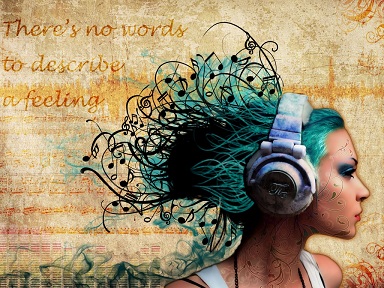
    Musical expression is the art of performing music in such a way that it manipulates the audience’s emotions. How does one do this? Well it’s the way music is performed, the dynamism in volume, touch, timing of the music indicating excitement, energy, playing certain notes which indicate intensity, and color. In great artists, one can feel that it is the soul that is speaking.

    Musical expression is about communicating emotions to the masses, and that is why music is such an important department in film making. It’s not just the story and the acting and the direction. it’s also the music in the background, It is a monster of a challenge for a movie to communicate grief, happiness, mystery, horror without music.
    As an experiment, one may imagine popular scenes in movies, and then cut out the music. say for e.g. the scene in the end of ‘Pursuit of Happyness’, where the film communicates the ultimate feeling of happiness. If the music is cut out, I seriously doubt that it can replicate the intended feeling.
    You may try it in the video link provided below. The film tries to portray the emotion in 1:25 and it builds up till it peaks at 2:51.
    see it with the music and without, is there a difference?

    [youtube=http://www.youtube.com/watch?v=WsYl63dAZHA]

    Music has been the bosom buddy of Film and Theater since the early Renaissance period of Europe, or should I just call it bosom buddy of Theater, as films were still science fiction in those days. But music was equally or maybe more important then, than it is today. When Films finally started in the late 1800’s, technology to play sound was still unavailable, so there were just visuals with facial expressions and live music to communicate those emotions.
    Imagine, without music it would just be a room full of silence, black and white visuals and the occasional cough of a fellow viewer. Boring…
    The Charlie Chaplin movies were originally played with live music, his movies continued to be popular even after the advent of synchronized audio, so later they added the music to his movies.

    Here’s another interesting example: What does the term ‘midi’, mean?
    Midi music is music that’s played by the computer. the computer is given certain commands to play notes in a certain time. Midi music was very popular between 1980s to late 90’s with the introduction of personal computers and 8/16 bit video games. Yes computers can play music, but this music is just a series of notes played exactly note to note by the computer, there is no expression in it, no varied dynamics, no rubato. Lets have a contest between computers and humans. 🙂

    Computer vs Humans (Soundtrack: Schindler’s list – Title ~ John Williams)

    Computer

    Human

    Result: Who wins?

    □ Human
    □ Computer

  • One Man Band… (Are they a joke or gifted musicians)

    One Man Band… (Are they a joke or gifted musicians)

    Greetings Friends,

    Whenever I used to hear the term One Man Band. I used to picture a cartoonish guy strapped up with wierd tin cans and stuff that made noise, trying to get attention from people to give him money.

    By definition, a one man band is a person who plays multiple instruments at the same time to present a musical sequence, that should be pleasing to the ear.

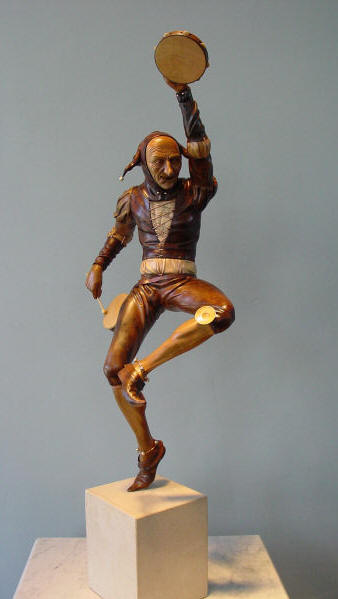
    The concept started many years ago, far back during the Elizabethan era where apparently her court jester used to play the pipe, and tabor (a percussion instrument) together to please her.

    Through many years One Man Bands have been looked down as a joke, why? Maybe that’s how these guys have been presented to us, on television shows, cartoons, and many other forms of media. Maybe it’s how history puts it, how it all started out by court jesters, who’s job was to make people (Mainly the nobles) laugh, maybe that avatar has stuck to the reputation of a One Man Band all these years.

    Maybe there are some One Man Bands, who actually do the things I described in the introduction, maybe there are a few jokers out there making noise to put a smile on a grieving face. But I’ve come to realize that there are people who can really play multiple instruments (with prowess), and the end result is truly consonant music for us to enjoy. These geniuses can amaze anyone with their skill and let me not change the rep on these guys, geniuses are usually crazy nut cases. Just like the example I’ve given below.

    With technological breakthroughs in music, studio equipment, and software easily available these days, the term One Man Band is also used to describe a performer who plays every instrument on a recorded musical piece one at a time, and then mixes them together in a multitrack.

    e.g:- David Meshow (Mechaud) is a musician based in Canada who plays Vocals, Guitars – (Lead, Rhythm, and Bass), Percussion – (Drums, Beat box, Xylophone), Violin, and Keyboard in his band called David Meshow. Here are some videos of his songs that he published on Youtube.

    David Meshow: Guitar – (Lead, Rhythm, Bass), Percussion – (Beat boxing, Water Xylophone), and some crazy conducting
    [youtube=http://www.youtube.com/watch?v=lseRUfGN1Ts]

    David Meshow: Guitar – (Lead, Rhythm, Bass), Percussion – (Drums, Xylophone)
    [youtube=http://www.youtube.com/watch?v=N5rcmsxIKDc]

  • Possibly the most expensive musical instrument there is.

    Possibly the most expensive musical instrument there is.

    Hello folks! This is the Vitthala temple in a town called Hampi in Karnataka state of India.

    No, there isn’t any mistake with the topic of this post. You see, the temple itself is a musical instrument. Yep!

    One of the most notable and interesting features of this Temple is the musical pillars. Each of the pillars that support the roof of the main temple represents a musical instrument, and is constructed as 7 minor pillars arranged around a main pillar. These 7 pillars, when struck, emanate the 7 notes from the representative instrument, varying in sound quality based on whether it represents a wind, string or percussion instrument.

    There are around 56 main pillars in this temple and I can’t help but imagine this temple in it’s hay days, in it’s full glory with 56 musicians playing ‘one instrument’, the Vitthala temple.

  • Rock Music (Literally)! Music created by rocks.

    Rock Music (Literally)! Music created by rocks.

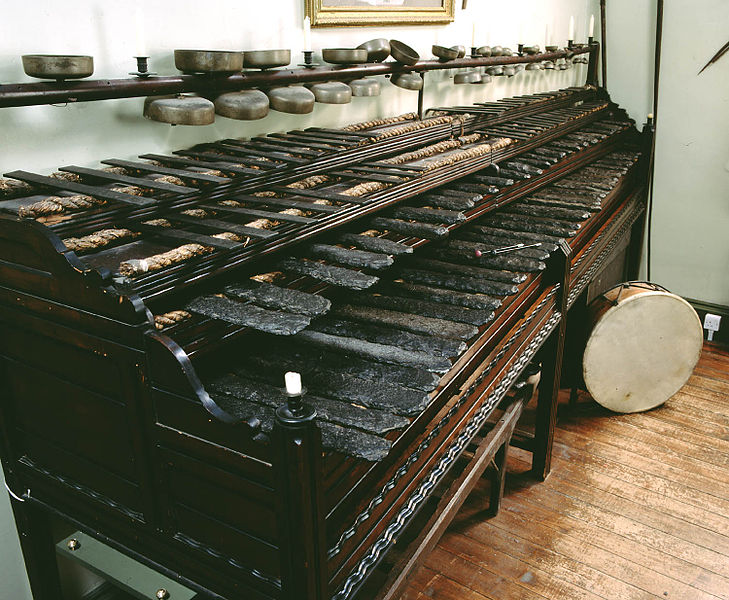
    Popularly known as the musical stones of Skiddaw as these musical stones were found in the town of Skiddaw, North Cumbria, Great Britain by Joseph Richardson in the year 1790. Woah! that’s a long time back. Geologically these stones are known as Hornfels.

    He made a Lithophone or a xylophone out of these stones, a playable instrument. Boy would I like to hear someone perform on this. Joseph and his 3 sons did perform on it and had considerable success with their performance in Great Britain at that time, going on to be a toast of Europe with their exhilarating performances for the local crowd, the well to do as well as the royals. They were all set to tour America as well but Robert, the youngest son and the most talented of them all fell ill and died of pneumonia. The tour was abandoned and the band was not the same anymore. Subsequently the instrument was given to the Keswick museum and is still there for all to see and play.

    [youtube=http://www.youtube.com/watch?v=inWKcmVEwvs]


    Hey! I did come across 3 percussionists performing on the rocks! 🙂

    Check this out:

    [youtube=http://www.youtube.com/watch?v=J0QtUNwixgY]