
Tag: Music

  • The Art of Resolution: Exploring Musical Cadence and Its Echoes Across the Arts

    The Art of Resolution: Exploring Musical Cadence and Its Echoes Across the Arts

    In the grand symphony of human expression, few elements capture the essence of closure quite like a cadence. Imagine a storyteller weaving a tale that builds to a breathtaking climax, only to gently guide you to a satisfying end. Or picture a painter’s brush strokes converging on a focal point, where colors and forms find harmony. This is the magic of cadence—not just in music, but as a universal thread in the arts. At its core, a musical cadence is a sequence of chords that signals the end of a phrase, section, or entire piece, much like a punctuation mark in a sentence. It provides resolution, tension release, or even a teasing twist, inviting listeners to pause, reflect, or yearn for more. In this exploration, we’ll delve into the world of musical cadences, drawing parallels to other art forms, and illuminate how the circle of fifths—a fundamental musical map—guides these harmonious conclusions.

    The Heartbeat of Music: What Is a Cadence?

    Think of music as a flowing river, meandering through melodies and rhythms. A cadence is the point where the current slows, pooling into a moment of stillness or redirection. Derived from the Latin cadere, meaning “to fall,” it evokes the gentle descent of notes resolving into repose. In classical compositions, jazz improvisations, or pop anthems, cadences act as emotional anchors, shaping how we feel the music’s journey.

    There are several types of cadences, each with its own flavor of finality:

    • The Perfect Cadence (also known as the authentic cadence): This is the musical equivalent of a full stop. It moves from the dominant chord (built on the fifth note of the scale) to the tonic (the home base). It’s bold and conclusive, like the triumphant “amen” in a hymn or the resounding chord at the end of Beethoven’s Fifth Symphony. It leaves no doubt—the story is complete.
    • The Plagal Cadence: Often called the “amen cadence” for its use in church music, this softer resolution shifts from the subdominant (fourth note) to the tonic. It’s warm and affirming, akin to a gentle sigh of relief, heard in everything from folk songs to the closing bars of “Amazing Grace.”
    • The Deceptive Cadence: Here, expectation is playfully subverted. Instead of resolving to the tonic, it veers to an unexpected chord, creating a delightful surprise. It’s the musical plot twist, leaving you hanging, much like a cliffhanger in a novel.
    • The Half Cadence: This one pauses on the dominant, building suspense without full resolution. It’s an ellipsis in the melody, urging the music onward, as in the teasing build-up of a suspenseful film score.

    These cadences aren’t rigid rules but artistic tools, allowing composers to evoke joy, melancholy, or intrigue. They mirror the human experience: our lives are filled with endings that feel complete, lingering, or unexpectedly redirected.

    Echoes in Other Art Forms: Cadence Beyond the Notes

    Just as music finds its rhythm in cadence, other arts employ similar principles of progression and resolution, creating a sense of wholeness or anticipation. In literature, a cadence might manifest as the rhythmic flow of a sentence or the poignant close of a chapter. Consider the poetry of Shakespeare, where iambic pentameter builds to a rhyming couplet, much like a perfect cadence sealing a sonnet’s thought. The words rise and fall, resolving into clarity or leaving a resonant echo.
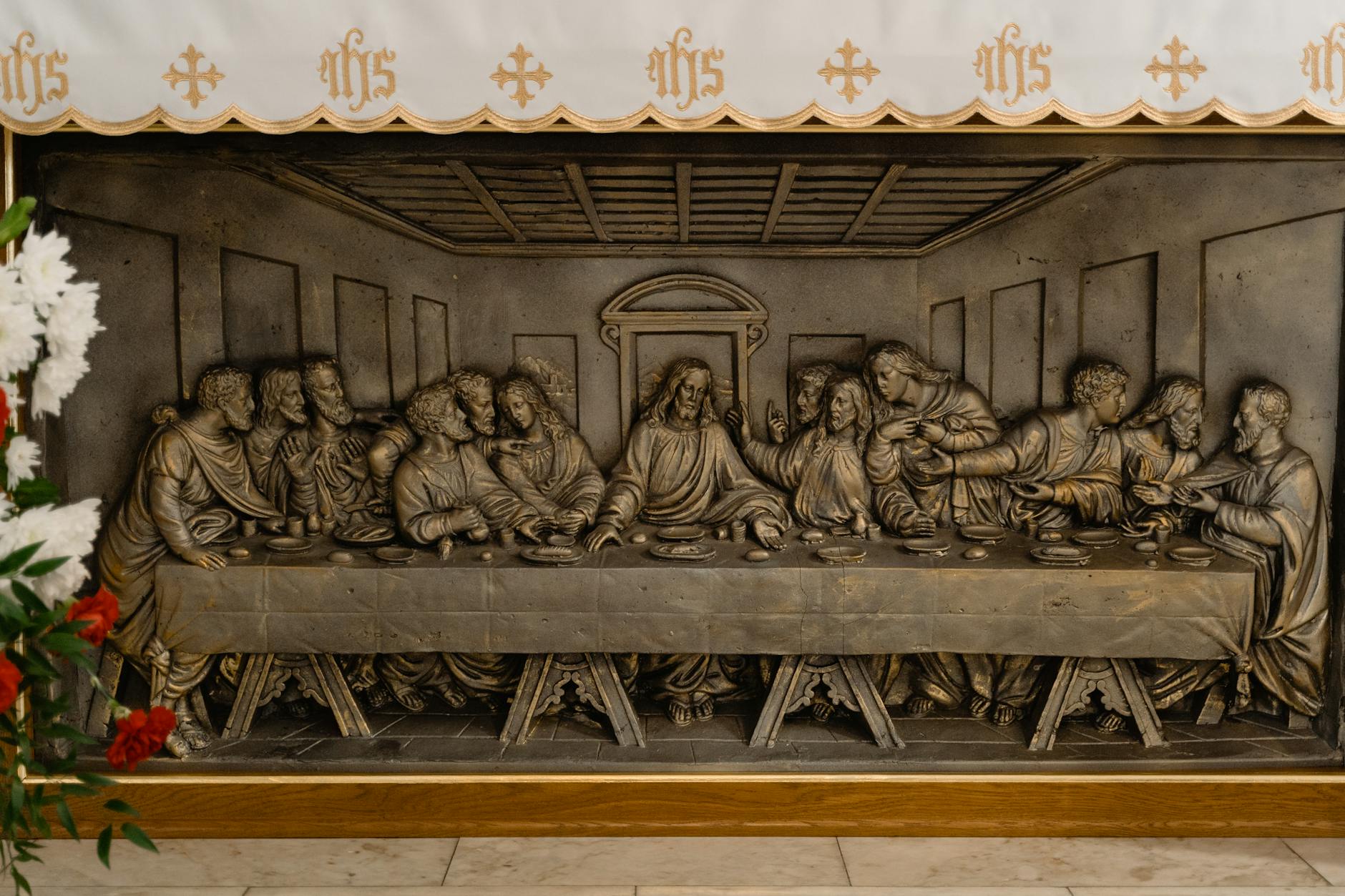
    last supper
    Photo by MART PRODUCTION on Pexels.com

    In visual arts, cadence appears in composition—the way lines, shapes, and colors guide the eye to a resting point. A Renaissance painting by Leonardo da Vinci, such as The Last Supper, uses perspective to draw viewers toward Christ’s figure, creating a visual “resolution” akin to a musical tonic. It’s a harmonious convergence, where tension in the apostles’ gestures finds balance in the central calm.
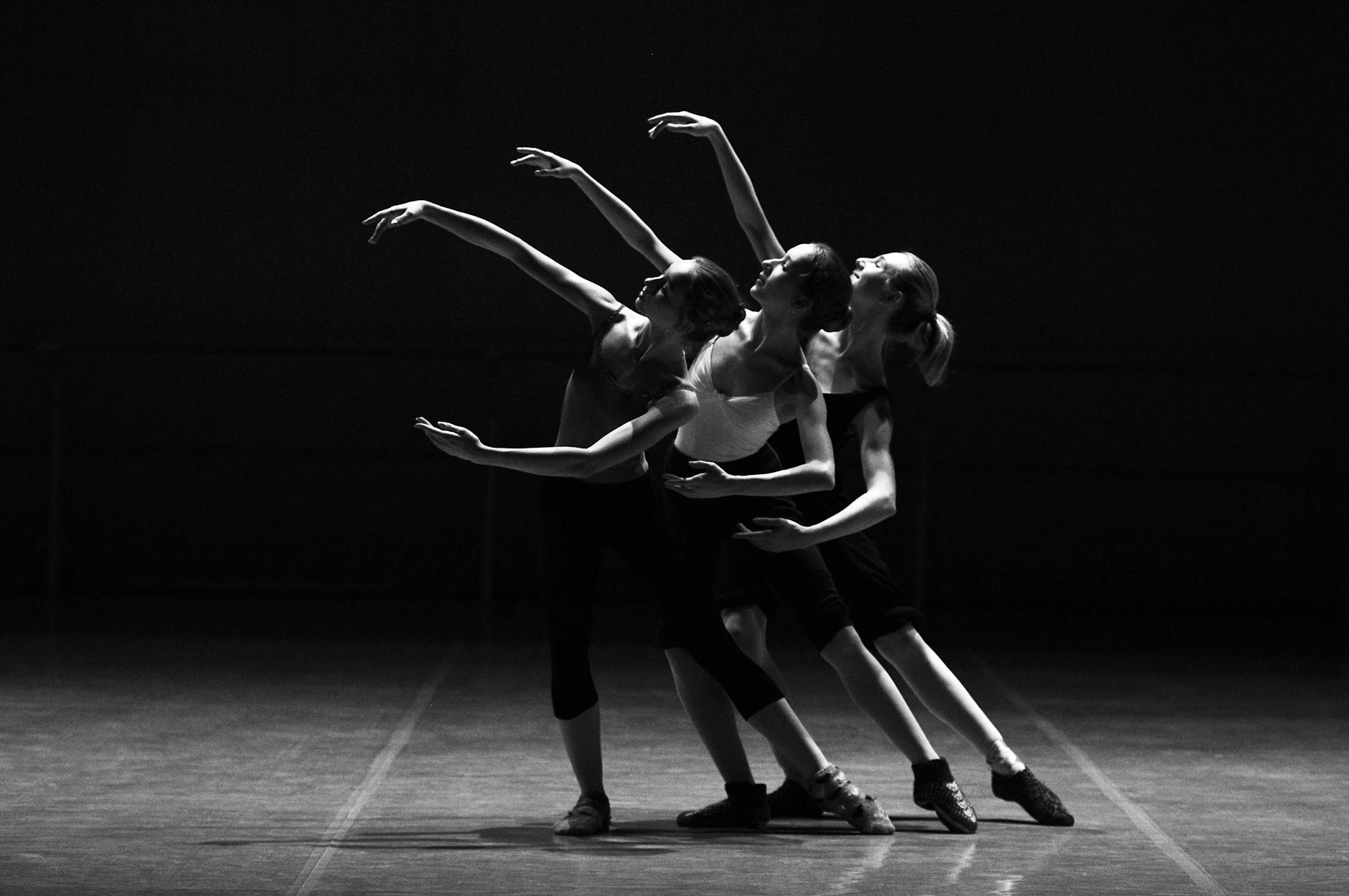
    three female dancers dancing
    Photo by Pixabay on Pexels.com

    Even in dance or theater, cadence emerges as the choreographed pause or the actor’s final line, delivered with weighty inflection. A ballet might build to a grand jeté, then descend into a graceful arabesque, echoing the fall and resolve of a plagal cadence. Across these forms, cadence is the invisible force that transforms chaos into coherence, inviting audiences to feel the artistry’s pulse.

    The Circle of Fifths: A Compass for Cadential Journeys

    To truly appreciate how cadences weave their spell, we turn to the circle of fifths—a elegant diagram that maps the relationships between musical keys, like a celestial wheel guiding harmonic voyages. Picture a clock face where each “hour” represents a key, progressing in intervals of perfect fifths: C to G, G to D, and so on, cycling through all twelve tones.
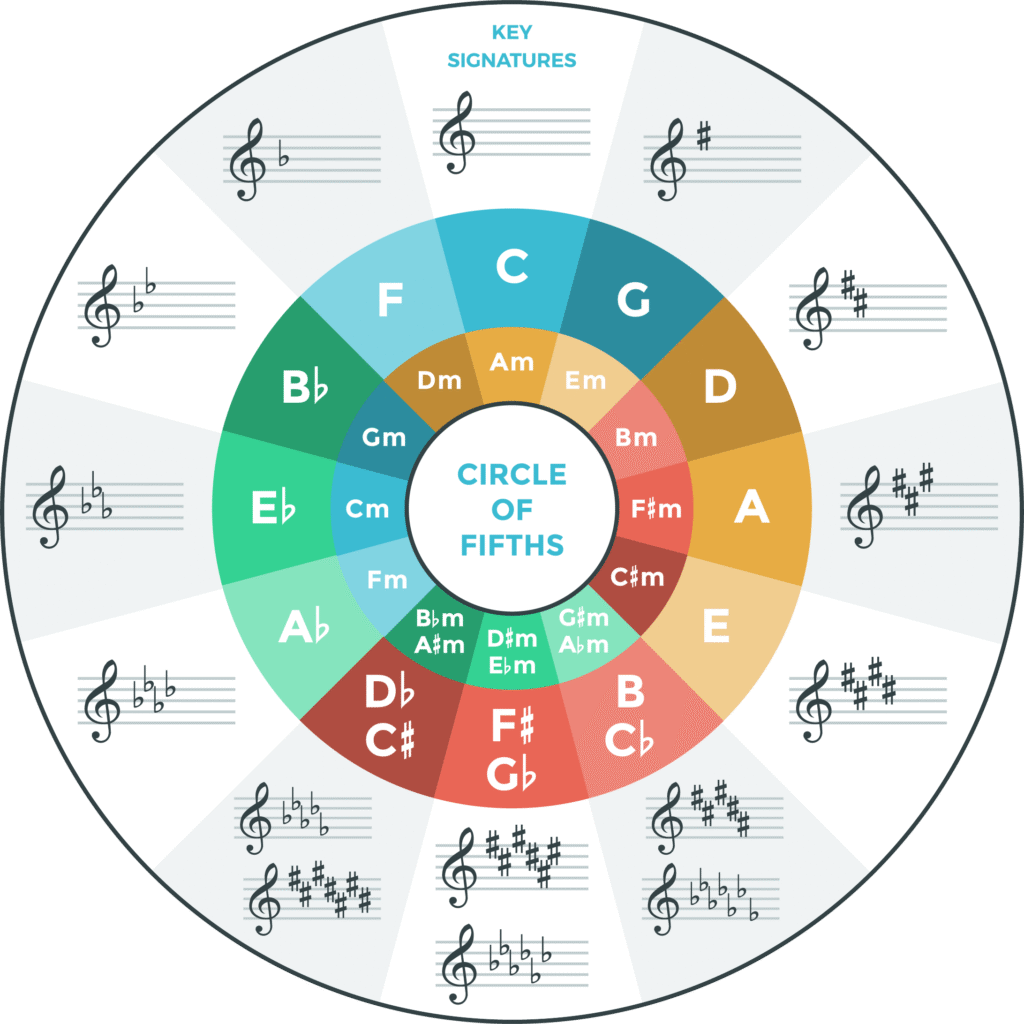
    This circle is the backbone of many cadences, revealing why certain chord progressions feel so naturally resolving. For instance, in a perfect cadence, the move from V (dominant) to I (tonic) follows the circle’s clockwise path, creating a sense of inevitable return home. Composers like Bach or modern songwriters like Taylor Swift harness this to craft emotionally charged endings. The circle also highlights modulations—shifts to new keys—that add depth to cadences, much like a novelist changing settings to heighten drama.

    Far from a mere technical tool, the circle of fifths embodies music’s interconnected beauty, reminding us that resolution often lies in the elegant dance of relationships, whether in chords or in life’s broader tapestry.

    A Timeless Harmony

    In the end, musical cadence is more than a technical flourish; it’s a profound expression of our innate desire for closure and renewal. It whispers of journeys completed and new ones begun, resonating across art forms in ways that touch the soul. Whether you’re humming a favorite tune, losing yourself in a novel’s final pages, or gazing at a masterful canvas, cadence invites you to savor the art of ending well. So next time a song draws to its close, listen closely—you might just hear the universe sighing in perfect harmony.

  • The Art of Repetition: Why Musicians Must Practice Again and Again

    The Art of Repetition: Why Musicians Must Practice Again and Again

    When we watch a master musician perform, it seems as though the music flows effortlessly; fingers dancing, breath steady, expression alive. Yet behind that ease lies a paradox: the human mind can only hold a fragment of the performance at once.

    Our working memory is like a narrow spotlight. At any given moment, we can attend to rhythm, or tone, or phrasing, but not all at once. To expect otherwise is to ask the mind to juggle more than it was built to carry. This is why practice is not a single act of mastery, but a ‘layering’ of attention across time.

    Each repetition is a kind of engraving. When we focus on one detail, let’s say, the precise lift of a finger or the swell of a crescendo; we etch it into long-term memory. Once secured there, it no longer demands conscious effort. The body remembers, the ear remembers, the hands remember. And so the mind is freed to turn its gaze elsewhere, to the next detail waiting in the wings.

    This is why musicians return to the same passage again and again. Not because they are slow to learn, but because they are building a cathedral of memory, stone by stone. One run for rhythm. Another for intonation. Another for dynamics. Over time, these layers fuse into a structure strong enough to withstand the pressures of performance.

    Repetition is not drudgery; it is liberation. It allows the performer to move from the mechanics of sound to the poetry of music. What begins as deliberate effort becomes instinct, and what was once fragmented becomes whole.

    In the end, practice is less about grinding perfection than about trusting the process of memory. Each run is a gift to the future self, a quiet investment in fluency. And when the moment of performance arrives, the musician no longer thinks of rhythm or tone or phrasing separately. They simply play, and the music, at last, is free.

  • The Circle of Fifths: A Compass for the Musician’s Journey

    The Circle of Fifths: A Compass for the Musician’s Journey


    In music, as in life, patterns are everywhere — some obvious, some hidden until you learn how to see them.
    The Circle of Fifths is one of those patterns: a perfect loop of relationships that turns chaos into clarity.
    It’s not just a chart for musicians; it’s a map of connection, showing how every key, every chord, every note is part of a greater whole.


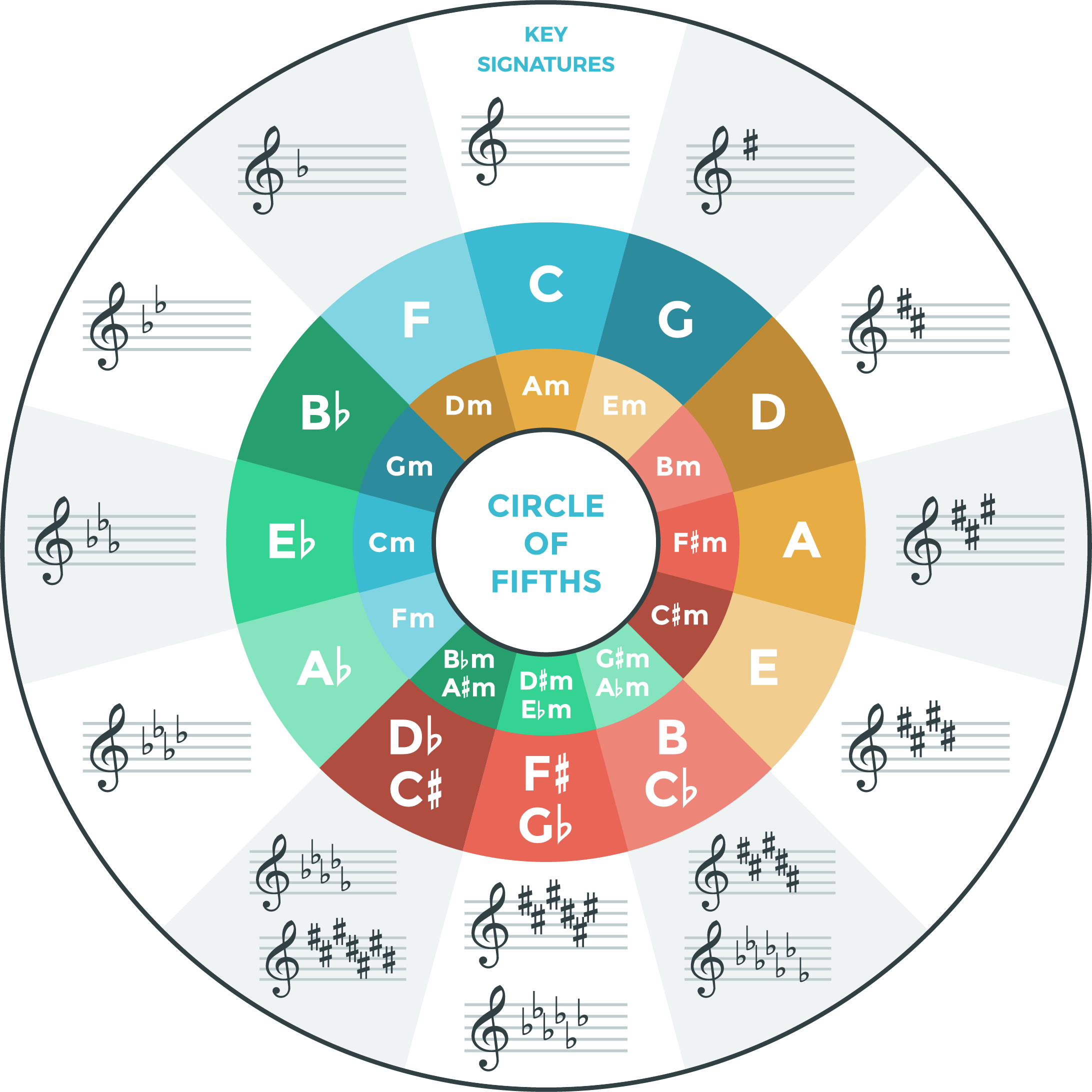
    The circle of fifths as reference to the content of the article.

    The Shape of Harmony

    Imagine standing at C major — pure, unaltered, no sharps, no flats.
    Step clockwise, and each move is a perfect fifth upward:
    C → G → D → A → E → B → F♯ → D♭ → A♭ → E♭ → B♭ → F → back to C.

    • Clockwise: Each step adds a sharp, sharpening the tone, like adding light to a canvas.
    • Counterclockwise: Each step adds a flat, softening the edges, like dusk settling over a landscape.
    • Relative minors: Each major key has a shadow twin — its relative minor — three steps counterclockwise. C’s is A minor, bright and melancholy all at once.

    A Story That Began Centuries Ago

    The roots of this circle stretch back to Pythagoras, who found harmony in numbers and ratios.
    Over centuries, musicians refined it into the modern Circle of Fifths — a tool that’s as useful for a jazz improviser in a smoky bar as it is for a symphony composer in a grand hall.


    Why It Matters (Beyond Theory)

    • Key Signatures at a Glance – No more guesswork; the circle tells you instantly.
    • Smooth Modulation – Move between keys like a storyteller shifting scenes.
    • Chord Progressions – Build sequences that feel inevitable, like the turning of seasons.
    • Transposition – Change a song’s key without losing its soul.

    In Practice

    1. Composing – Use the circle to chart emotional arcs in your music.
    2. Improvising – Let it guide you through keys without breaking the flow.
    3. Arranging – Choose modulations that feel like natural conversations between chords.
    4. Learning – Anchor your memory in the circle’s symmetry.

    A Reflection

    The Circle of Fifths is more than a musician’s tool — it’s a reminder that everything is connected.
    Keys that seem far apart are only a few steps away if you know the path.
    In that way, it’s a lot like relationships, business, and life itself:
    the art lies in knowing when to move forward, when to return, and when to let the music resolve.


  • Concentration! The root of any art form.

    Concentration! The root of any art form.

    Practicing any art form needs a lot of concentration. For me, it’s a battle with myself to concentrate while I practice music.

    It’s not that I’m incapable of concentrating but it’s always been a challenge for me to maintain it while I play. My practice routine doesn’t only consist of honing my musical skills but my concentration as well.

    It’s always been a constant complain for my teachers, be it academically or musically. But the important thing is, I’m aware of this weakness and I’m constantly improving in it. Yoga helps a lot, especially the ‘Sukhasana’ if you plan on improving this particular ‘skill’.

    Yes it’s a skill, and I’m sure you will agree if you watch this video. I was mesmerized watching this. I salute this fellow for his mastery with his art of balance and concentration.

    PS: I loved the oriental music in the background as well 😉

    [youtube=http://www.youtube.com/watch?v=jJrzIdDUfT4&vq]