

A Shared Key Signature, Two Different Worlds
In music theory, relative major and relative minor scales share the same key signature but begin on different notes.
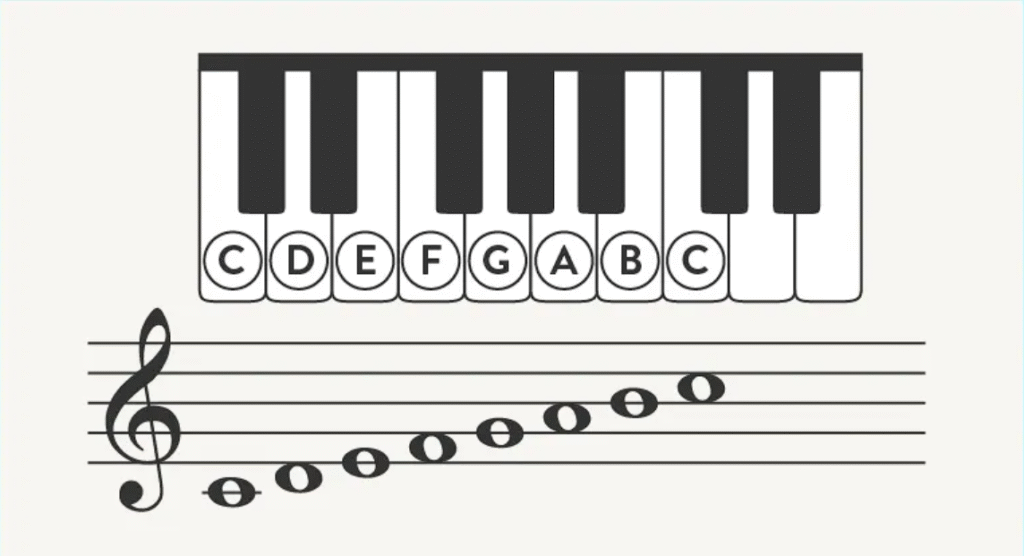
C major scale
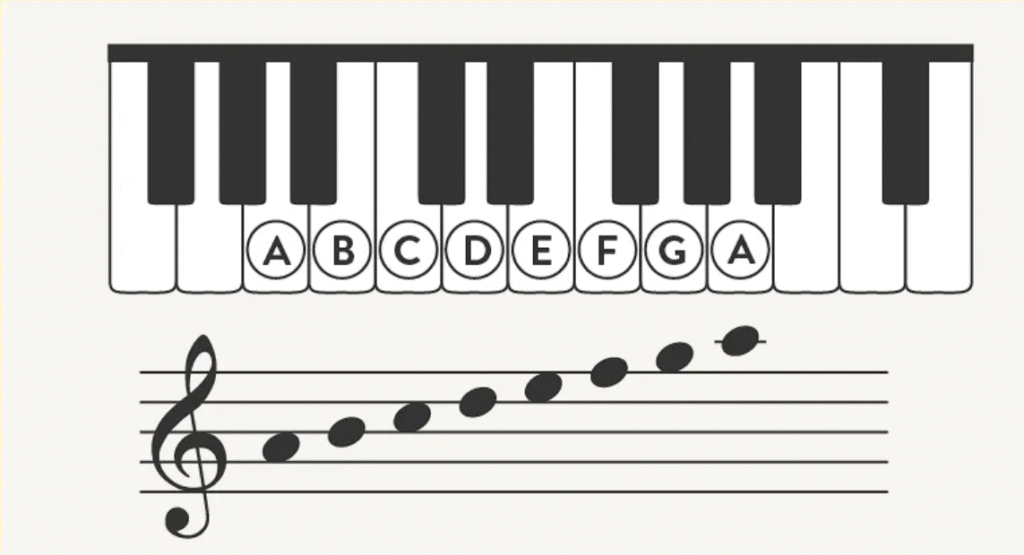
A minor scale
For example, C major and A minor both use no sharps or flats, yet their tonal centers create distinct moods. The relative minor is always found on the sixth degree of its major scale, while the relative major is the third degree of its minor scale. This relationship allows composers and performers to shift seamlessly between brightness and melancholy without altering the written accidentals.
Historical Roots and Evolution
The concept of relative keys dates back to the Baroque and Classical eras,

when composers like Bach and Mozart exploited these relationships to create contrast and emotional depth. In the Romantic period, composers expanded this practice, weaving dramatic shifts between relative major and minor to heighten tension and release. The shared key signature made modulation smoother, enabling composers to explore expressive contrasts without confusing performers or audiences.
Interesting Observations
- Psychological effect: Major keys are often associated with joy or clarity, while minor keys evoke introspection or sadness. The relative relationship allows musicians to pivot between these emotions with minimal structural change.
- Improvisation tool: Jazz and rock musicians frequently use relative minors to expand soloing options. For instance, a guitarist improvising in C major can instantly switch to A minor for darker melodic ideas.
- Songwriting trick: Pop and folk songs often shift between relative keys to add variety. A verse may sit in the minor, while the chorus bursts into the relative major, symbolizing emotional resolution.

Applications in Modern Music
- Composition: Relative keys provide a palette for contrast. A composer can move from major to minor to reflect narrative shifts—hope to despair, tension to release.
- Arranging: Orchestrators use relative minors to enrich harmonic progressions, adding depth without introducing new accidentals.
- Performance: Musicians exploit the relationship for expressive improvisation. Guitarists, pianists, and vocalists often lean on relative minors to add color to otherwise straightforward major passages.
- Education: Teachers introduce relative keys early because they demonstrate how scales interconnect, helping students grasp the architecture of tonal music.
Closing Thought
The relationship between relative major and minor is more than a theoretical curiosity, it’s a bridge between light and shadow in music. By sharing a key signature yet offering contrasting tonal centers, these scales give musicians a powerful tool for storytelling, improvisation, and emotional expression. Whether in Bach’s fugues, a jazz solo, or a pop ballad, the dance between relative major and minor continues to shape the soundscape of human creativity.
Leave a Reply